

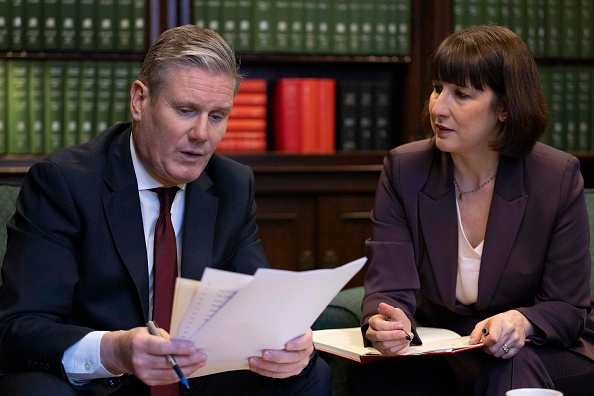
Bond vigilantes dining out on “hock”
Once again this morning, UK borrowing costs hit their highest since ’98, as the bond market starts to think about what a managed transition of power from Starmer to Burnham would look like.
The problem isn’t the Prime Minister. It’s the Labour Party
The starting point for any discussion about UK borrowing costs should not be the occupant of Downing Street, nor the identity of the next prime minister. It should be the structure of the state’s balance sheet. That is what the gilt market ultimately prices. Debt levels, funding costs, and the credibility of the policy framework that sits behind them matter far more than any individual.
Every time borrowing costs move higher, the focus shifts to personalities. Who is in charge, who might replace them, and whether a different leader would calm markets. This seems to miss the point. Investors are not pricing individuals, they are pricing constraints, importantly whether the political system, in aggregate, understands those constraints and is willing to operate within them.
Walking the debt tightrope
In that context, UK borrowing costs are not about the current Prime Minister, nor any future one. It is the Labour Party as an institution, and the persistent gap between what much of the party wants to do and what the debt dynamics allow.
The starting point is simple. Debt is already high, and servicing costs have risen materially. The UK no longer has the luxury of funding itself at rates comfortably below nominal growth. As a result, fiscal policy is now constrained by market confidence in a very real way. The bond market is no longer an abstract concept, it is the marginal buyer of UK risk, and it sets the price accordingly.
“Can’t tax your way to growth”
This is why Keir Starmer’s comment that the UK cannot tax its way to growth matters. It is not just politically convenient; it is economically accurate. The tax burden is already elevated and further increases risk weakening the supply side at exactly the wrong time. Growth is the only sustainable way to stabilise debt, and growth is highly sensitive to incentives.
The challenge is that much of the Labour Party still operates within a framework that assumes higher taxes and higher spending can be delivered without materially affecting growth or the cost of capital. That assumption is increasingly at odds with market reality. Investors do not just listen to what the leadership say, they assess the broader direction of travel. If the centre of gravity in the party points towards increased spending commitments without a credible growth offset, borrowing costs will reflect that.
Home-grown inflation too
The cost-of-living crisis illustrates the issue more clearly than most political debates. While external factors have played a role, rising domestic costs have been a key contributor. Policies that raise the cost of hiring feed directly into prices and weaken business investment. Where firms cannot pass costs on, adjustments are made through hiring decisions and capital allocation. For example, we’ve seen pizza chain Franco Manca take out a number of locations in the last week citing “disproportionately high UK taxes”.
Against this backdrop, the question for gilt investors is which version of Labour would ultimately govern. There is a version that markets could be comfortable with. One that accepts constraints, prioritises productivity, and makes difficult choices on expenditure. In relative terms, figures such as Wes Streeting appear closer to that framework. A focus on efficiency, reform, and trade-offs aligns more closely with what is required to stabilise borrowing costs.
Credibility issue.
The issue is credibility. The Labour Party is not driven by one individual. It is shaped by its internal dynamics and by its union base, both of which tend to favour a more expansive fiscal stance. Markets understand this. They do not price the best-case scenario, they price the probability weighted outcome. Where fiscal discipline risks giving way to political pressure, yields adjust accordingly.
The reaction to Andy Burnham’s comments was telling. His remark that the UK has to “get beyond this thing of being in hock to the bond markets” reflects a strand of thinking within the party that markets instinctively reject, not the rhetoric itself, but for what it implies about relaxing fiscal constraints.
Bond markets do not need to be challenged; they need to be convinced. When policy signals suggest those constraints may be ignored, investors respond through pricing. Often labelled as bond vigilantes, but in reality, it is a straightforward repricing of risk.
There are signs that this dynamic is already in play. UK yields remain sensitive to fiscal signalling in a way that reflects underlying fragility. The market has learnt that the UK’s fiscal position offers limited room for error. Any perceived loosening of discipline is quickly reflected in higher borrowing costs.
It’s just maths
At its core, this is not a political story, it is an arithmetic one. With debt at current levels, further expansion cannot be the default setting. Hard decisions are required. Expenditure has to be prioritised, Policies that raise the cost base of the private sector need to be weighed against their impact on growth. Productivity has to become the central focus, not an afterthought.
For Labour, the challenge is clear. If it wants to deliver lower borrowing costs, it has to align the party with the constraints imposed by the debt. That means moving away from reflexive tax and spend policies and towards a credible programme that supports growth and limits current expenditure.
Until that happens, the gilt market will continue to price not just the UK’s debt levels, but the uncertainty around how its political system responds to them. It is that uncertainty, more than any individual Prime Minister, that keeps borrowing costs elevated.